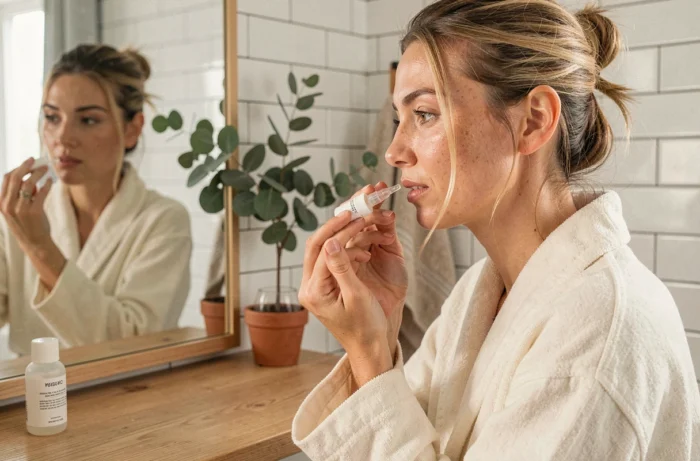
The beauty market is full of promises of radiance, glow and a flawless complexion. Ten-step routines sit alongside product ranges claiming to be “natural,” even though the term offers little in the way of regulatory guarantees.
Since EU Regulation 2023/1545, the list of fragrance substances that must be declared individually on cosmetic packaging has expanded, with a transition period for placing products on the market running until July 31, 2026. This gives sensitive consumers a practical point of reference—and serves as a reminder that checking the ingredient list is more reliable than trusting a “natural” claim on the label.
Minimalist beauty routine: what dermatologists really recommend
The American Academy of Dermatology recommends a simple routine for preteens: a gentle cleanser, fragrance-free moisturizer and sunscreen. This is a good starting point at any age. Anti-aging ingredients and chemical exfoliants are not suitable for every skin type, and layering them in a daily routine can cause irritation, dryness or allergic reactions.
Three steps are all you need each morning to maintain the skin’s balance:
- A gentle cleanse, without harsh sulfates, to remove overnight oil without stripping the skin’s lipid barrier
- A moisturizer suited to your skin type (lightweight for combination skin, richer for dry skin), applied while skin is still slightly damp
- A sunscreen with an adequate SPF, even in winter, because UV rays pass through clouds and remain the leading cause of premature skin aging
In the evening, remove makeup instead of using your morning cleanser. A targeted treatment (such as a hydrating or repairing serum) can round out your routine, but using just one active ingredient at a time helps avoid overwhelming the skin. Those exploring beauty at Ulta Beauté will find product ranges that make it easy to build this foundation without buying too many products.
Adding a product doesn’t necessarily improve your routine. Every addition should address a specific need, not a trend spotted on social media.

Natural and organic skincare: what the label says (and what it leaves out)
The word “natural” has no single regulatory definition in cosmetics. A product can contain only a small percentage of plant-derived ingredients and still make this claim without being misleading. Organic certifications (Cosmos Organic, Ecocert, Nature & Progrès), on the other hand, require compliance with verifiable standards, including minimum levels of organic ingredients and lists of excluded controversial substances.
EU Regulation 2023/1545 brings a measurable improvement: more fragrance allergens must be listed individually on packaging. Products already on the market before the deadline may, subject to certain conditions, remain available until July 31, 2028. For reactive skin, this increased transparency makes it easier to identify substances to avoid.
Here are a few practical tips for reading the label on facial or body care products:
- Ingredients are listed in descending order of concentration: if the “star” ingredient appears near the end, it is present only in a small amount
- Latin terms generally refer to plant extracts, while English terms refer to synthetic molecules—but a Latin name does not guarantee that an ingredient has not been chemically processed
- “Paraben-free” does not mean “preservative-free”: the replacement preservative may also cause reactions in some people
An organic product is not automatically gentle on every skin type. Essential oils, for example, are natural yet rank among the most common allergens in cosmetics.
Everyday beauty budget: spend less without sacrificing results
A Nelly Rodi study conducted with Beauté Privée and reported by CosmeticOBS describes respondents as generally following short routines and seeking third-party reviews for reassurance before making a purchase. Since the survey methodology has not been disclosed, these findings should be treated with caution. They do, however, confirm a trend: consumers want effective routines, not lengthy ones.
Marketing encourages people to buy one product for every “problem”: one serum for pores, another for wrinkles, a third for radiance. In practice, a well-formulated moisturizer can address several of these needs. The best investment is still a good sunscreen used every day, because it prevents damage rather than trying to correct it after the fact.
The same principle applies to makeup. A lightweight foundation or BB cream, mascara and tinted lip balm are enough for a polished everyday look. Versatile palettes for eyes and cheeks reduce the number of products you need without limiting your options.
Refills and packaging: an emerging factor in choosing products
L’Oréal is developing refillable formats across several categories, and refills account for a notable share of Mugler sales, according to Circana data cited by the brand. Choosing a refillable product lowers the cost per gram over time and reduces packaging waste. Refillable options are not yet widespread across the industry, but more are becoming available in body care, fragrance and makeup ranges.
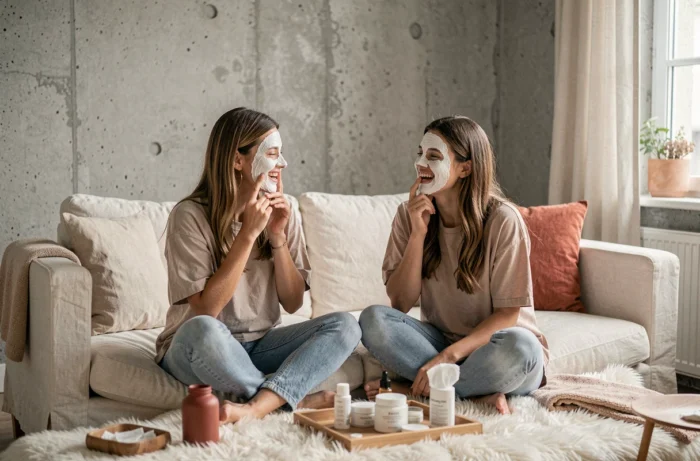
Makeup and skincare: when technique matters more than the product
Application technique affects the finish just as much as the formula itself. Applying foundation with a brush, a damp sponge or your fingers will give different results. A damp sponge sheers out the product slightly for a skin-like finish, while a brush provides more coverage.
For the eye area, the dermatological advice is simple: the skin is thin, has few sebaceous glands and reacts quickly to friction. Gently patting eye cream on with your ring finger (the finger that applies the least pressure) helps limit the micro-trauma that can cause fine lines.
Hair care follows the same principle of simplicity. A shampoo suited to your scalp (oily, dry or sensitive), conditioner on the lengths and a weekly mask cover most needs. Leave-in treatments or hair oils can round out the routine for very dry or damaged hair, but they do not replace these basics.
Building a reliable daily beauty routine comes down to three choices: identify the steps that protect your skin rather than trying to correct it, read labels beyond the marketing claims, and resist the temptation to add another product when results plateau. Above all, skin needs consistency.