A horse clears an obstacle of 1.20 meters without flinching, but bureaucracy never skips a form. Between the thrill of galloping and the mountain of paperwork to compile, horseback riding is a sport of balance – and not just to keep the saddle in place.
How can a simple entry to a horse competition turn into an administrative marathon? Behind every stride on the track lies a discreet mechanism — sometimes smooth, sometimes jammed — that governs access to competitions and shapes the daily lives of riders as well as organizers.
The administrative backstage of equestrian sports: what every rider should know
In the equestrian world, passion meets discipline and a management style where approximation has no place. Each equestrian competition relies on the commitment of a behind-the-scenes team, men and women who orchestrate a demanding administrative ballet. Take Marie: a seasoned instructor, who has gone through the rigors of Timothée Anciaume’s team, she juggles between her affection for her horse and the formidable precision of the procedures. Sarah, essential at the reception, ensures the compliance of each file, unflappable and always ready to assist. Clément, a true Swiss army knife, manages the horses of owners, while Charlotte, an tireless instructor, injects energy into the stable.
Safety in horseback riding relies on a strict arsenal of rules. A rider must comply: with an animal as unpredictable as a horse, the slightest negligence can turn into a tragedy. On the field, the equestrian competition mobilizes several key roles:
- The judge, pillar of fairness, scrutinizes each horse-rider duo;
- The course designer, architect of the track, collaborates closely with the president of the jury;
- The paddock steward checks the horse’s equipment and papers;
- The timer records every second, every round, without fail.
On the paperwork side, the management of entries and rankings goes through the FFE SIF. This central platform streamlines administrative tracking and simplifies life for both organizers and riders. Training, orchestrated by the departmental riding committee and the French Equestrian Federation, remains the cornerstone of a smooth operation. Human sciences, techniques, and rigor come together to ensure the safety and fairness of competitions, whether in Paris or in a small country stable.
What documents, procedures, and actors for a serene practice?
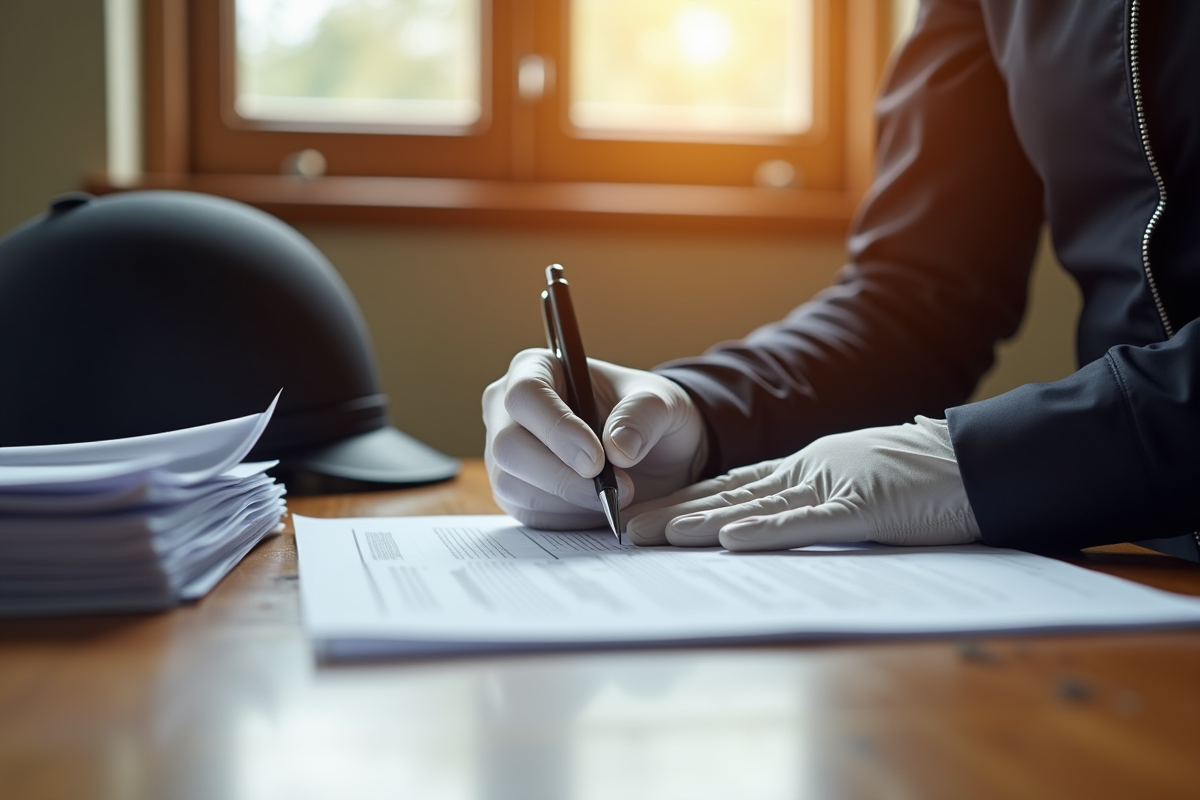
The equestrian practice is not limited to the bond between the rider and their mount: it relies on a solid documentary and institutional framework. Before stepping into the stirrup, one must present a license validated by the FFE, a medical certificate, and, for the horse, an impeccable health booklet. This precious document certifies vaccinations, identification, and veterinary follow-up.
In rural areas, the nerve of the war is land ownership. The Safer, an organization founded in 1962, oversees the distribution of agricultural land. From Provence-Alpes-Côte d’Azur to the Loire, 16,632 land operations marked 2024. Each file is scrutinized by a technical committee: mayors, associations, members of the agricultural chamber, all debate and vote for the most relevant candidate.
- A winemaker, Mr. Maradona, wishes to expand his AOP estate;
- A goat farmer, Mr. Lavillenie, aims to develop his herd;
- A municipality like Pasloin aspires to launch a sustainable agricultural activity.
At every stage, confidentiality and transparency are the foundation of trust. From the submission of the file to the transfer, the consultation between local committees, agricultural chambers, and Safer outlines the process. For any equestrian project, respecting this administrative framework guarantees the solidity of breeding operations and the peace of mind of enthusiasts.
Ultimately, when the paperwork fades away, all that remains are the hooves on the track and the adrenaline of a clear round. But for the magic to happen, each piece of the administrative puzzle must fall into place, even if it sometimes requires more endurance than a derby in the rain.