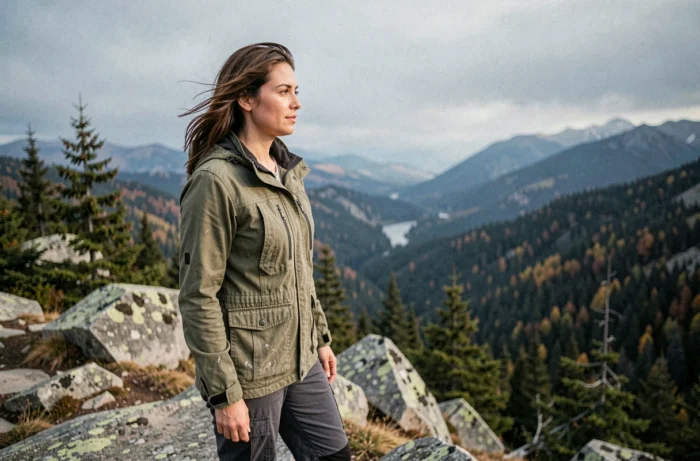
Hiking, kayaking, climbing, wild camping: choosing an outdoor activity depends less on personal preferences than on factors that are rarely highlighted. The terrain, local regulations, how busy the site is and mobile network coverage all have a tangible impact on the experience. Comparing these factors before setting out can help you avoid a disappointing or poorly planned trip.
Outdoor activities and terrain constraints: a comparison by environment
Not all outdoor activities are equally suited to every environment. A water hike through a gorge calls for different precautions than Nordic walking through woodland. The table below compares the main types of activity with the environments where they are best suited, the fitness level required and the constraints to plan for.
| Activity | Suitable environment | Fitness level | Main constraint |
|---|---|---|---|
| Water hiking | Gorges, shallow rivers | Intermediate | Water levels vary by season |
| Bouldering | Forest (sandstone, granite) | Intermediate to advanced | Crash pad required; damp rock |
| Kayaking or paddleboarding | Lake, calm river, coastline | Beginner to intermediate | Wind and currents can be underestimated |
| Nordic walking | Forest trails, plains | Beginner | Requires learning pole technique |
| Wild camping | Mountains, forest outside protected areas | Variable | Check local regulations |
| Via ferrata | Equipped cliffs, mountains | Intermediate | Specialist equipment (lanyard, helmet) |
The key takeaway is that physical fitness matters less than being prepared for the terrain. A beginner kayaking on a sheltered lake will enjoy a smooth outing. The same beginner on a windy river will spend more time struggling than taking in the scenery.
To explore a wider range of activities and filter by terrain, Excursion Info’s activities let you compare these factors before booking an outing.
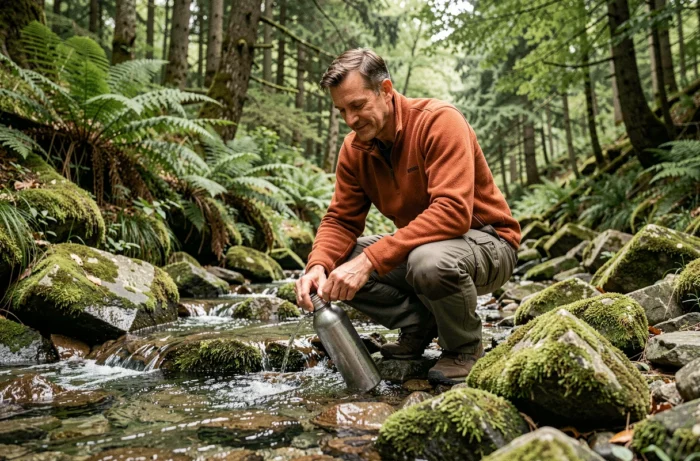
Wild camping regulations and visitor numbers: two factors that can change your plans
Wild camping is a good example of the gap between how we imagine an activity and what it is actually like on the ground. Wild camping regulations vary from one national park to another and from one municipality to another.
In some national parks, wild camping is subject to specific time restrictions and distance requirements. Elsewhere, it is strictly prohibited. Setting out without checking local regulations could mean a fine and, more importantly, having to pack up camp in the middle of the night.
Visitor numbers matter just as much as regulations. Écrins National Park now analyses visitor flows and compares them with the presence of sensitive species. This data helps direct hikers to less crowded routes. For visitors, that means a trail packed on a Saturday in July can offer a completely different experience on a Tuesday in September.
What to check before setting out
- Check local wild camping or camping regulations on the park or prefecture website, including temporary restrictions related to fire risk.
- Check how busy the area is likely to be: some parks publish data or recommend less crowded alternative routes.
- Check mobile network coverage in the area and plan an appropriate way to raise the alarm (a satellite beacon if there is no coverage), especially when heading out alone.
Sharing your route and expected return time with someone remains the simplest and most effective safety measure, whatever activity you choose.
Water-based or land-based activities: how the environment shapes your choice
Competitors often group activities into categories such as water, land and air. This classification overlooks a more useful point: each environment comes with its own logistical constraints, and those logistics determine whether an outing will be enjoyable or frustrating.
For water-based activities, the main variable is the weather on the day. A calm lake is ideal for stand-up paddleboarding, while strong winds can make the same outing exhausting. Kayaking on a river also requires reading the current, a skill that takes practice. For a first outing, a lake or sheltered body of water offers a much more predictable setting than an exposed coastline.
On land, elevation gain and ground conditions make the difference. Bouldering in the forest (Fontainebleau is France’s leading destination) requires a crash pad, suitable climbing shoes and an understanding of how damp conditions affect the rock. Via ferrata requires specialist equipment (lanyard, harness, helmet) and a route fitted with cables and fixed rungs. In both cases, you can’t decide to go at the last minute without the right equipment.
Hiking alone: a special case
Hiking alone magnifies every factor. A fall on a remote trail can delay the alarm by several hours if no one knows your planned route. Solo hikers’ accounts consistently point to one thing: route planning and letting someone know your plans in advance matter more than physical fitness.
On a marked, well-used trail, the risk remains moderate. Off-trail at altitude, without mobile coverage, the margin for error shrinks considerably. Your route choice has a far greater impact on risk than your choice of activity.
Summer mountain outings: rising visitor numbers are reshaping the options
More and more holidaymakers are heading to the mountains in summer. This trend is changing the activities available at some sites, with regulated trails, booking slots for mountain huts and temporary wild camping restrictions during busy periods.
For hikers and via ferrata enthusiasts, this means planning further ahead. The most popular mountain huts fill up weeks in advance during peak season. Car parks at popular trailheads are full by mid-morning.
Choosing weekdays, setting off early or following secondary routes recommended by the parks can help you enjoy a quieter experience in nature. The quality of a mountain outing depends as much on when you go as on the trail itself.